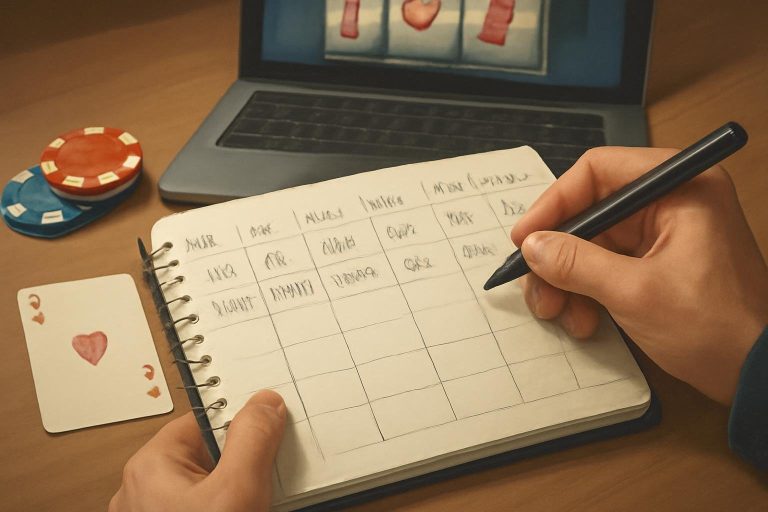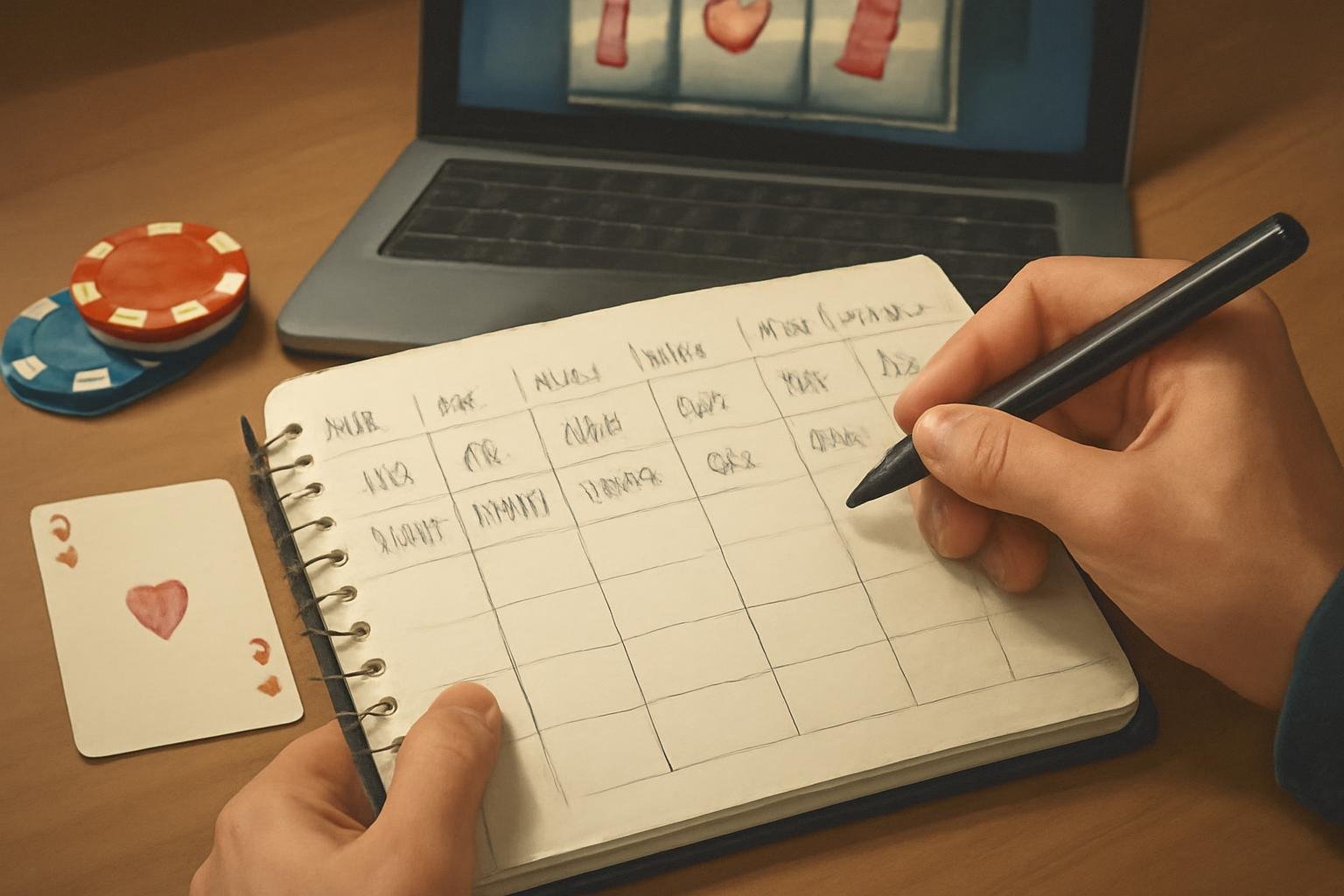
A short play log can make online casino activity easier to review. Rather than relying on memory or focusing on a single win or loss, record how much time and money a session actually involved. The purpose is not to predict results or improve the odds; it is to create a clear record that can help you notice when play is taking more than you intended.
Decide what the log is for
Keep the goal simple: document your activity, then compare it with limits you chose in advance. Casino games involve chance, and a record of past outcomes cannot tell you what will happen next. Avoid using the log to search for “hot” games, patterns, or a way to recover losses.
If you are new to online play, it may help to review general considerations in this beginner’s guide to online casinos before deciding whether a session fits your plans.
What to record for each session
Use a note, spreadsheet, or other private method that is convenient to maintain. A useful entry can include:
- Date and start/end time: Record the actual duration, including time spent browsing or waiting between games if that is part of your session.
- Game type: Note the general category, such as slots, roulette, or baccarat. There is no need to record every spin or hand.
- Amount set aside: Write down the session budget you chose before starting, not just the amount deposited.
- Amount spent and amount returned: Keep these as separate figures. A returned balance is not the same as money wagered, and the figures can be confusing if you mix deposits, withdrawals, and play.
- Any interruption or limit reached: Note whether you stopped at your planned time or spending boundary, and whether a break was needed.
Keep the record factual and brief. For example: “Saturday, 8:00–8:35 p.m.; slots; planned budget $20; stopped at the time limit.” This avoids turning the log into a running tally of every outcome or an invitation to continue playing.
Separate session results from deposits
Deposits are money moved into an account; they are not necessarily the same as the amount wagered or the final result of one session. If you top up midway through play, note that separately. When reviewing your records, use consistent definitions so you do not accidentally count the same money twice or mistake a deposit for a loss.
For a basic session summary, compare the amount available at the beginning with the amount remaining at the end, while noting any deposits or withdrawals during that period. If the account history is unclear, do not guess. Check the platform’s transaction records, and keep your own notes limited to what you can verify.
Review the log without chasing patterns
Look for practical signals rather than betting predictions. For example, are sessions routinely lasting longer than planned? Are you adding money after reaching your budget? Do you tend to play when tired, upset, or trying to make back a previous loss? These observations concern your choices and boundaries; they do not reveal what a game will pay next.
It can also be useful to read about common mistakes in casino play as a reminder that past results do not guarantee future outcomes. If reviewing the log makes you feel pressured to win back money, pause rather than treating another session as a solution.
Protect your notes and account information
A play log does not need passwords, full payment details, identity documents, or other sensitive information. If you keep it digitally, choose a private location and avoid sharing screenshots that reveal account details. For questions about how a website handles personal information, consult its privacy policy.
Make the record useful
Set a modest review routine, such as checking the log once a week, rather than monitoring outcomes constantly. Compare actual time and spending with the limits you set before play. If those limits are repeatedly difficult to follow, consider stepping away and seeking support from a trusted person or a local gambling-support service. A log is a tool for awareness, not a guarantee of control or a strategy for winning.
The most useful record is one that helps you make a clear decision: continue only within your planned boundaries, take a break, or stop. If it instead encourages longer sessions or attempts to recover losses, stop using it as a gambling tracker and take a break from play.
About the Author